
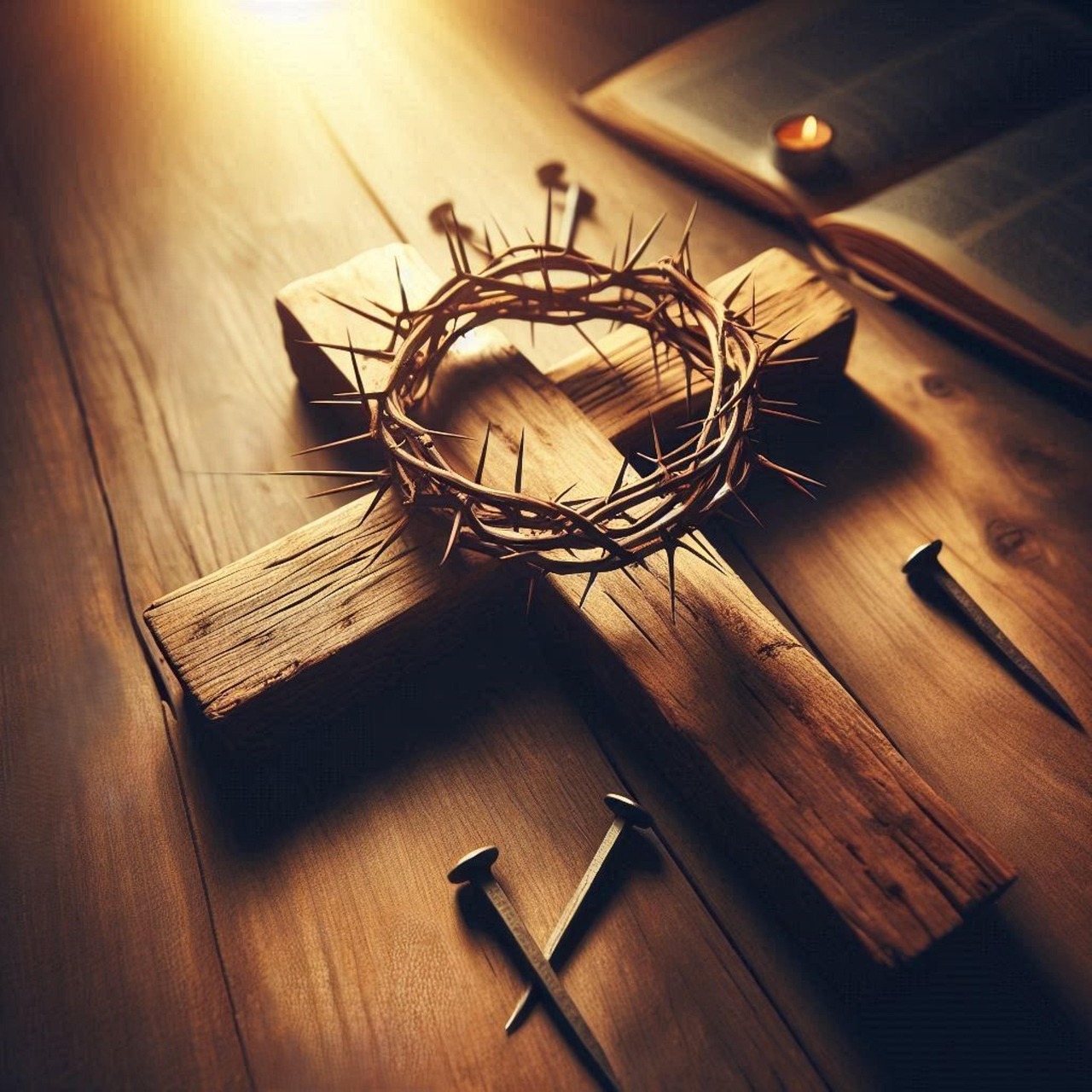
God’s Self‑Binding Plan of Grace
In Biblical theology the Covenant of Redemption occupies a central place in the story of salvation. Though the term does not appear in Scripture, the Bible reveals that the Father, Son, and Holy Spirit entered into a solemn agreement before the creation of the world. In that covenant God promised to rescue fallen humanity, each Person of the Trinity assuming a distinct yet harmonious role. The covenant displays God’s aseity—His utter independence, His self-sufficiency, His eternal existence apart from creation—and it emphasizes certain attributes that define the divine triune nature: glory, love, wisdom, faithfulness, and relationality.
The Covenant of Redemption Defined
The Covenant of Redemption is understood as a pact God made with Himself. The Father, Son, and Holy Spirit, existing eternally apart from any created thing, agreed that the Son would become the mediator of redemption and that the Spirit would apply the work of the Son to believers. This covenant is not an agreement with humanity, it is the Triune God’s internal commitment to bring about the salvation of sinners whom He would later give to the Son as His own possession. Scripture hints at this pre‑temporal (before time/eternal) arrangement in passages such as John 17:5, where the Father declares that the Son has been given “all that is yours,” and in Ephesians 1:4‑5, which speaks of God choosing us “in love” before the world began. The covenant therefore sets the stage for the entire salvation plan that unfolds in redemptive history.
Roles Within the Trinity
Although the three Persons share the same divine essence, the Covenant of Redemption assigns each person of the Godhead a particular function. The Father, as the sovereign initiator, determines the purpose and scope of redemption. The Son, the obedient Mediator, undertakes the work of incarnation, atonement, and resurrection. The Holy Spirit, though not explicitly named in the covenant’s formulation, operates implicitly as the divine agent who applies the Son’s accomplished work to God’s people. This distribution of roles respects the Biblical pattern of divine economy: the Father sends, the Son obeys, and the Spirit proceeds.
The Father’s Gift
The covenant begins with the Father’s gracious decision to give the Son a people for His own possession. In granting the elect (those who are saved) to the Son, the Father demonstrates both love and sovereignty. The phrase “a people for His own possession” captures the relational intimacy that the Father intends: a redeemed community that will belong to the Son as a cherished bride belongs to her husband. This act is not a transaction with created beings; it is an expression of the Father’s desire that the Son might have a covenantal relationship with a people who would willingly respond to Him. The Father’s initiative reflects His glorious attribute of love, for He chooses to give away what He possesses for the sake of relational fellowship.
The Son’s Redemptive Commitment
Responding to the Father’s will, the Son agrees to redeem the people according to the Father’s plan. The Son’s obedience is evident in the incarnation, where He “took on flesh” (Philippians 2:6‑8) and entered the world as a helpless infant. His sacrificial death on the cross satisfies divine justice, while His resurrection secures victory over sin and death. Throughout the New Testament the Son repeatedly affirms His role as the “Lamb of God who takes away the sin of the world” (John 1:29) and as the “Mediator of a new covenant” (Hebrews 9:15). The Son’s willingness to fulfill the Father’s purpose displays divine wisdom and faithfulness; He accomplishes redemption exactly as the Father intended, without deviation or failure.
The Implicit Ministry of the Holy Spirit
The covenant’s wording does not explicitly mention the Holy Spirit, yet His presence is unmistakable. The Spirit is the “seal” of the covenant (Ephesians 1:13‑14), guaranteeing that the promises made between Father and Son are applied to believers. By regenerating hearts, illuminating Scripture, and empowering sanctification (more about all of that in a later post), the Spirit makes the Son’s work effective in the lives of the redeemed. The Spirit’s activity reveals the relational nature of the covenant: the Father’s love, the Son’s obedience, and the Spirit’s sanctifying presence together draw believers into the divine fellowship. In this way the Spirit’s implicit role underscores the unity of the Trinity while highlighting each Person’s distinctive contribution.
Aseity and Relational Glory
Aseity—the doctrine that God exists independently of anything else—finds its fullest expression in the Covenant of Redemption. Because the covenant is an internal agreement among the Persons of the Trinity, it does not depend on any external agency. God, in His self‑sufficiency, freely chooses to bind Himself to a plan of redemption. This self‑binding reveals the relational quality of God’s aseity: even though He is utterly self‑existent, He nevertheless enters into a loving relationship with Himself that culminates in a relationship with created humanity. The covenant, therefore, is a vivid illustration of how divine independence coexists with divine relationality.
The covenant also displays God’s innate glory. By orchestrating a plan that brings sinners into communion with Himself, God magnifies His own excellence. The love that moves the Father to give the Son a people, the wisdom that guides the Son’s redemptive strategy, and the faithfulness that ensures the Spirit’s perfect application—all converge to manifest the fullness of divine character. These attributes are not abstract qualities but are inseparably linked to the covenantal work of salvation.
Conclusion
The Covenant of Redemption stands as a theological cornerstone that encapsulates the depth of God’s self‑gift. It reveals a divine agreement in which the Father, Son, and Holy Spirit each fulfill a distinct role: the Father bestows a people, the Son redeems them, and the Spirit applies that redemption. Through this covenant God’s aseity is displayed not as isolation but as a relational self‑existence that overflows into love, wisdom, faithfulness, and glory. For the Bible believer, recognizing this covenant sharpens our appreciation of the triune God’s unified purpose and invites us to enter the covenantal relationship that He has prepared for us since before the world began. As we contemplate the Father’s generous gift, the Son’s obedient work, and the Spirit’s sustaining presence, we are drawn into the very heart of the divine covenant—a covenant that calls us to belong, to be transformed, and ultimately to share in the glory of the Triune God.
Leave a Reply